
Speakers
Pieter Dorrestein, PhD
University of California, San Diego
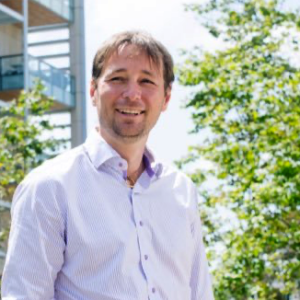
The Dorrestein Lab Our work aims to develop new mass spectrometry based methods to understand the chemistry of microbes, our microbiome and their ecological niche. In short, we develop tools that translate the chemical language between cells. This research requires the understanding of (microbial) genomics, proteomics, imaging mass spectrometry, genome mining, enzymology, small molecules structure elucidation, bioactivity screening, antibiotic resistance and an understanding of small molecule structure elucidation methods. The collaborative mass spectrometry innovation center that he directs is well equipped and now has twelve mass spectrometers, that are used in the studies to investigate capture cellular chatter (e.g. metabolic exchange), metabolomics, metabolism and to develop methods to characterize natural products. These tools are used to defining the spatial distribution of natural products in 2D, 3D and in some cases real-time. Areas of recent research directions are capturing mass spectrometry knowledge to understand the microbiome, non invasive drug metabolism monitoring, informatics of metabolomics, microbe-microbe, microbe-immune cells, microbe-host, stem cell-cancer cell interactions and diseased vs. non-disease model organisms and the development of strategies for mass spectrometry based genome mining and to detect and structurally characterize metabolites through crowd source annotation of molecular information on the Global Natural Products Social Molecular Networking at http://gnps.ucsd.edu through the NIH supported center for computational mass spectrometry that is co-developed with Nuno Bandeira.
Nancy Keller, PhD
Department of Medical Microbiology & Immunology
UW – Madison
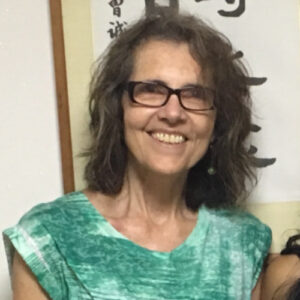
Dr. Keller’s research focus lies in genetically dissecting those aspects fungi that render them potent pathogens and superb natural product (also called secondary metabolite) machines. Our lab (i) elucidates molecules involved in the virulence of plant, animal and human pathogenic fungi and (ii) methods to express and characterize novel bioactive fungal secondary metabolites for drug development. Pathogenic fungi we work with includeAspergillus flavus which contaminates seed crops worldwide with the carcinogen aflatoxin, Penicillium expansum that contaminates apple with the mycotoxin patulin, Pseudogymnoascus destructans, the causal agent of White Nose Syndrome of bats and the human pathogen A. fumigatuscausing invasive aspergillosis, a disease with a mortality rate ranging from 50 to 90%.
Rino Rappuoli, PhD
Fondazione Biotecnopolo di Siena
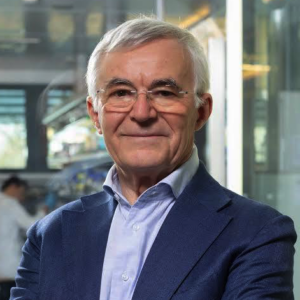
Rino Rappuoli, PhD, is Chief Scientist and Head External R&D at GSK Vaccines, based in Siena, Italy and Professor of Vaccines Research at Imperial College, London, UK. Prior positions were head of Vaccine R&D at Novartis, CSO of Chiron Corporation, and head for R&D at Sclavo. He earned his PhD in Biological Sciences at the University of Siena and has served as a visiting scientist at Rockefeller University in New York and Harvard Medical School in Boston. He was elected to the US National Academy of Sciences (NAS), the American Academy of Arts & Sciences, the European Molecular Biology Organization (EMBO) and as Foreign Member to the Royal Society of London. He was awarded the Gold Medal by the Italian President for contributions to public healthcare in 2005. In 2009, he received the Albert B Sabin Gold Medal for his work in the field of reverse vaccinology and in 2010 the Lifetime Achievement Award from the Institute of Human Virology in Maryland. In 2013 he was nominated third most influential person worldwide in the field of vaccines (Terrapin). In 2017 he received the Canada Gairdner International Award and the European Inventor Award for Lifetime Achievement. He has published more than 650 works in peer-reviewed journals.
Karina Xavier, PhD
Gulbenkian Institute for Molecular Medicine
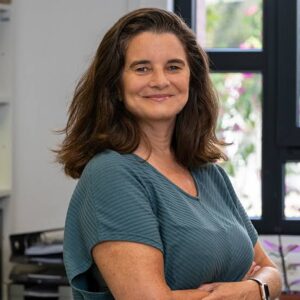
Dr. Xavier’s research interest is cell-to-cell interactions in bacteria and the role of these interactions in assembly, maintenance and recovery of bacterial consortia. In particular, their work focuses on cell-to-cell interactions mediated by quorum sensing signal molecules that foster interspecies interactions. They want to understand the role of these signaling processes in regulating bacterial group behaviors in polyspecies communities and the consequences of these processes in the beneficial and hostile interactions that these communities establish with their hosts. In the past, they demonstrated that bacteria can use quorum sensing signals to foster interspecies quorum sensing and we have discovered mechanisms that exists in some bacteria which enables them to interfere with quorum sensing signaling of other species. Their recent work enhances our understanding of how bacterial chemical interactions shape polyspecies bacterial communities and highlights the importance of interspecies interactions in modulating metabolic networks in bacterial communities such as the gut microbiota. Their findings reveal novel approaches that take advantage of these interactions to ameliorate host physiology.